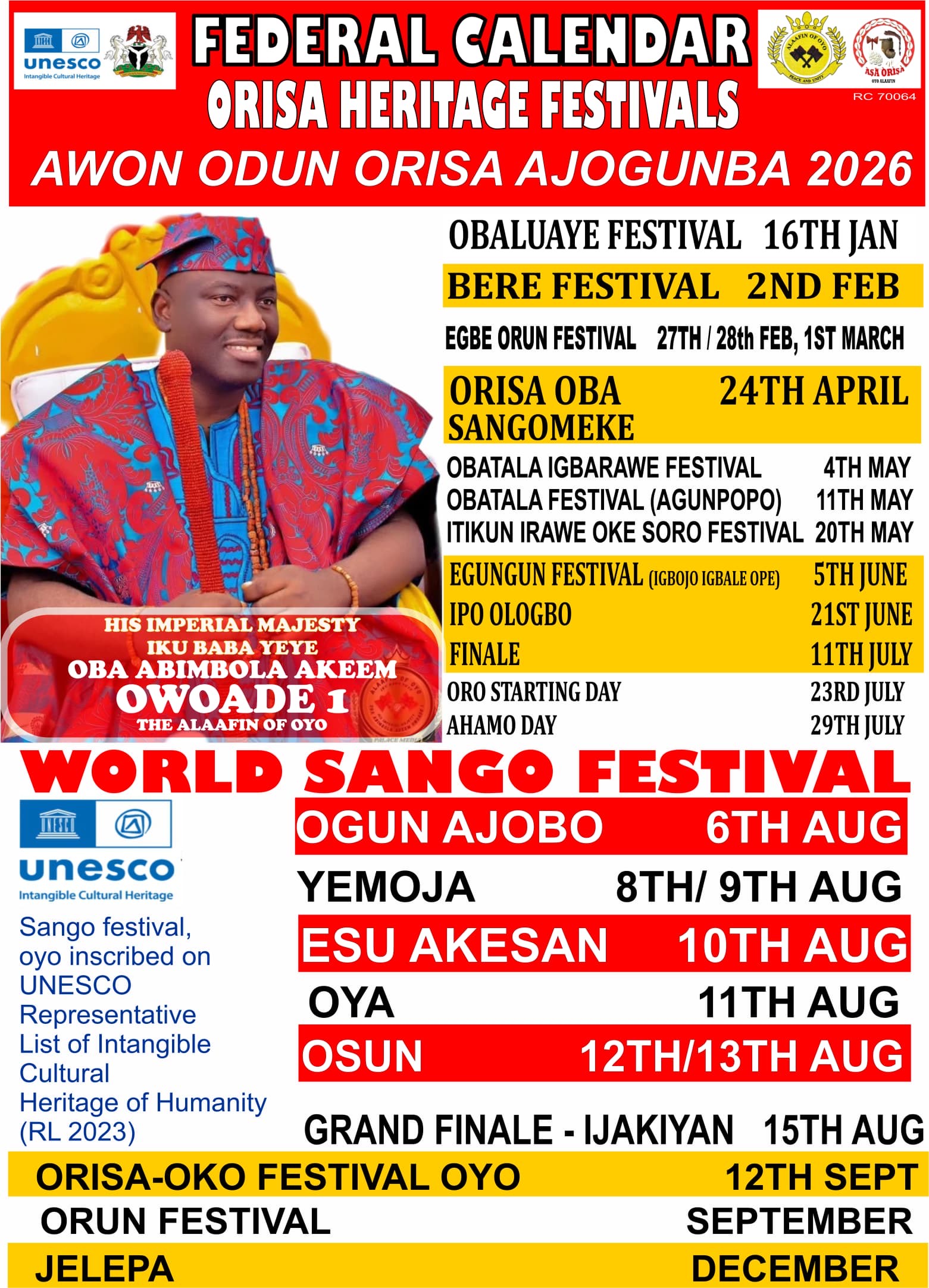
2014 Preservation of Orisa Festivals in Oyo with implementation of an Annual Festival Calendar in accordance to the Traditional Calendar- KÀLEŃDÀ ÌBÍLẸ̀ – KÓJÓDÁ
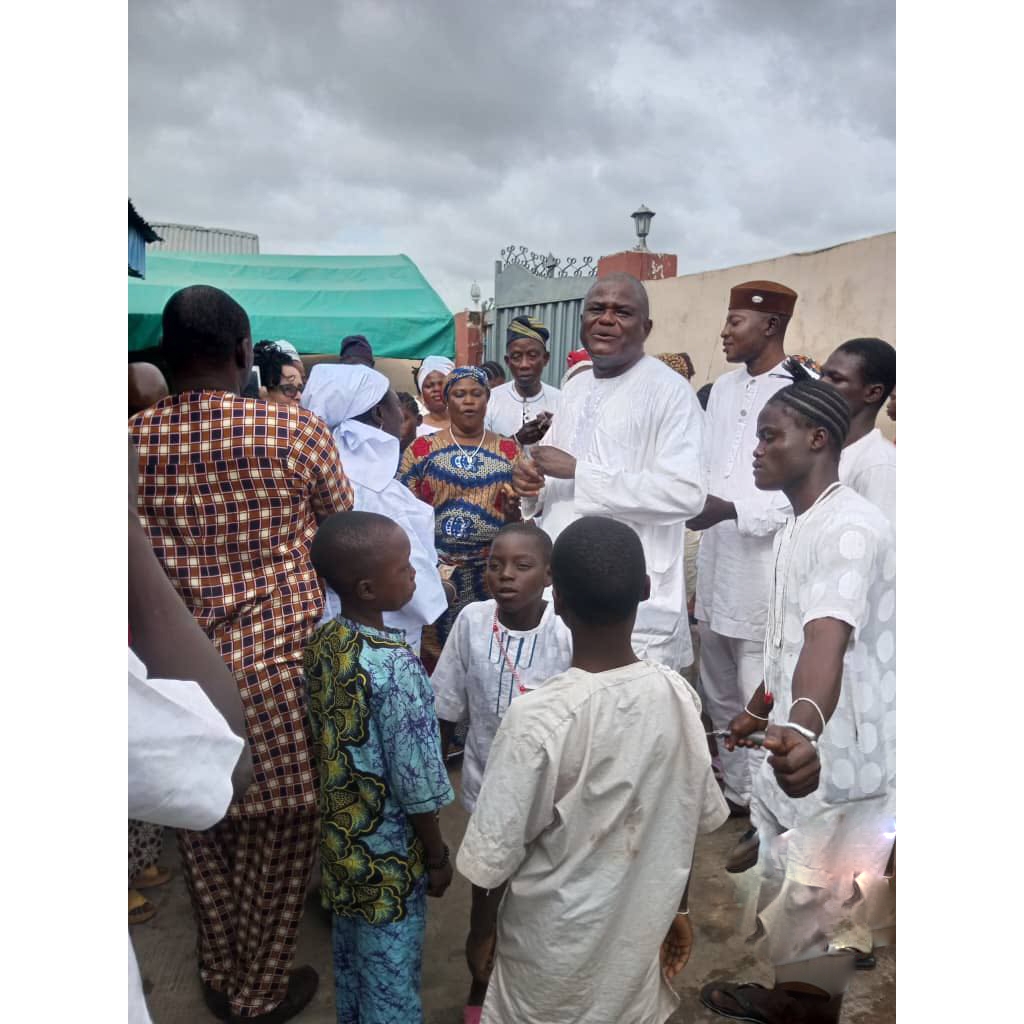
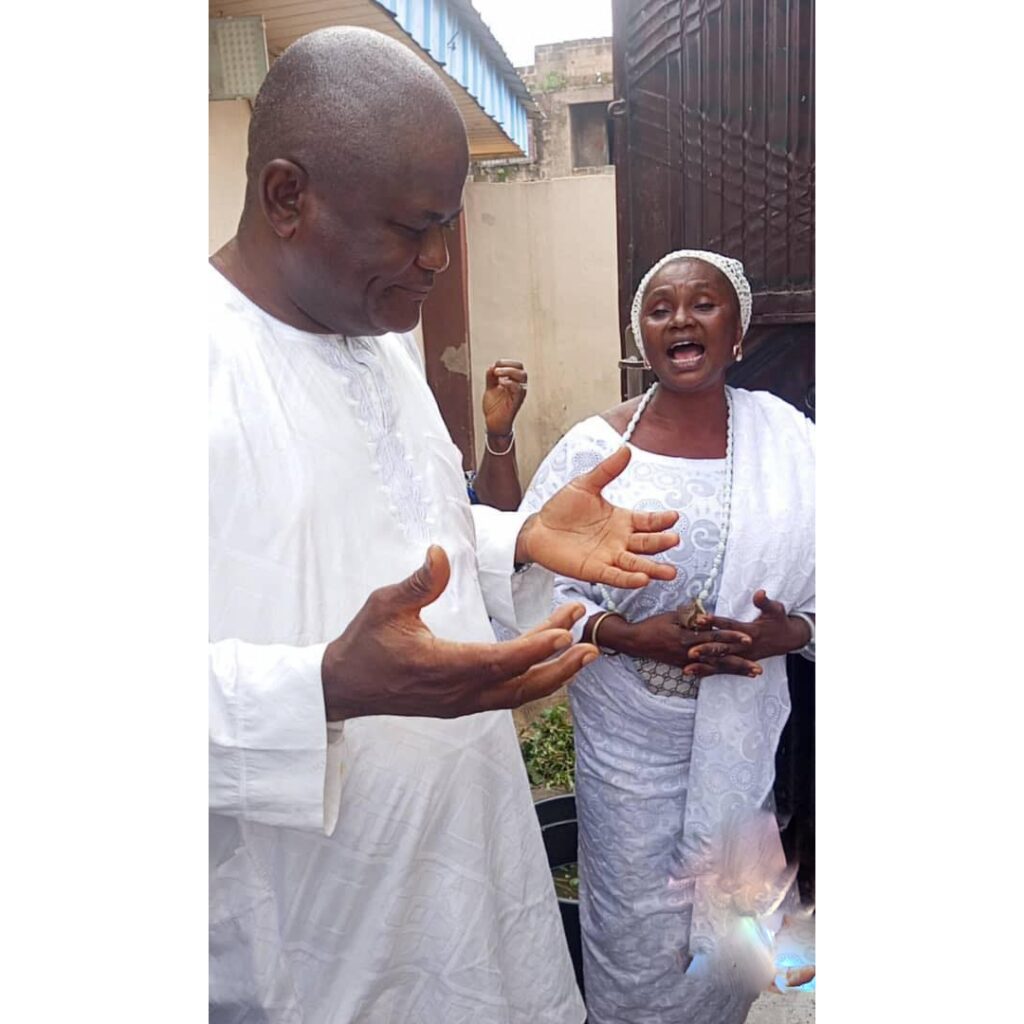
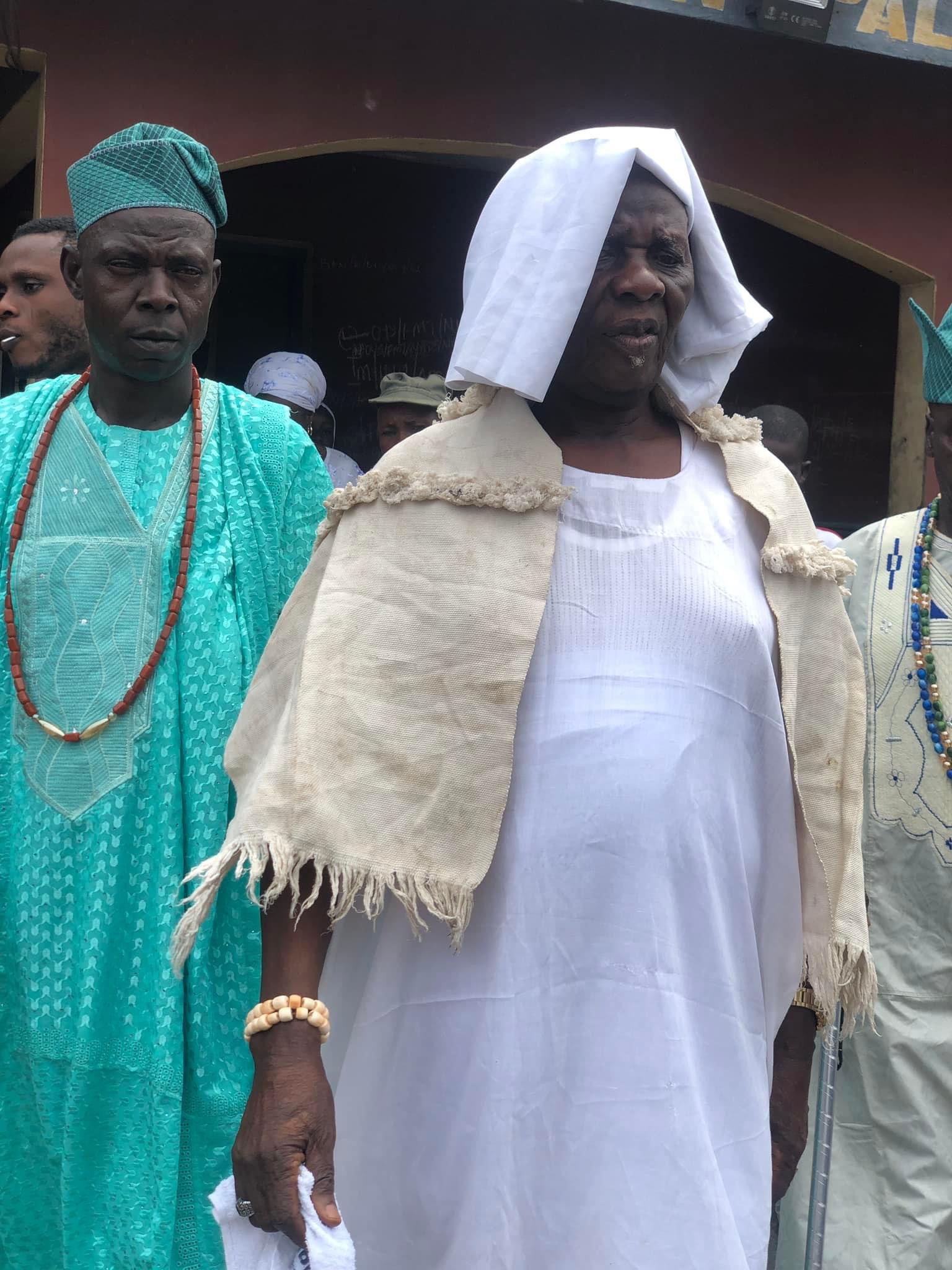
Safeguarding intangible heritage according to UNESCO is the protection of cultural identities and therefore the cultural diversity of humankind. Intangible Heritage includes but is not limited to traditional festivals, oral traditions, oral epics, customs, ways of life, traditional crafts. Despite colonialism and the introduction of foreign religions and western education, the traditional Yoruba families such as Sàngó, Iyemoja, Oya, Òsun, Obàtálá, among others, in Òyó have continued to maintain the practices left by their ancestors, this serves as a form of remembrance that, keeps the loop and memory alive to the lineage of their ancestors, as well as seeking advice, protection or solution in any family problem. However traditional families of Òrìsà in the city of Òyó are concerned with the preservation of their heritage due to their importance in their daily life practices, which remains at risk.
Sàngó Festival Unesco
Sàngó Festival is the most significant in Òyó, since it is deeply linked to the survival of the identity, culture and history of the people and it is a 10 day festival that takes place in August, marking the strong raining season. The annual festival of Sàngó represents the binding and a constant connection of the community with its ancestral world, the appreciation of the season of productivity and reaffirms the spiritual power of the throne of Òyó. This is the second harvest of yams known as Isu Egbe in the communities’, which marks a NEW CYCLE, renewing annually around the same period. This New Cycle marks the Traditional New Year that begins in August, during the Sango Festival the new yam starts to be eaten by the community. This period is sunny with strong rain, known as Àrámoká; Ogun , Osu, Yemonja, Oya and Esu are also celebrated during this period.
Òrìsà-Oko Festival
According to the tradition Òrìsà-Oko follows Sango Festival in August/September Seasonal change .This is the time for the communities and their ancestral Orisa to eat the new yam. The Òrìsà-Oko festival celebrates the ancestors /Orisa responsible for abundance hunting. Òrìsà-Oko is celebrated for good enabling good returns for hunters through the season. Through prayers offered during this festival, the people believe they are blessed with peace, fertility of the land and self as evidenced by ease of reproduction and fulfillment. The festival highlights the Yoruba beliefs of honouring their ancestors/Orisa who are attached to every aspect of life.
Orun Festival
The Orun Festival in Oyo is celebrated during the rainy season and the second harvest of yam. The festival highlights the connection between the role of Basorun and the Alaafin. It emphasizes that the Alaafin does not have ultimate power when the people are aggrieved. The Basorun steps in as the voice of the people against the Alaafin to uninstall him as a king, in case the unwritten constitution is not followed. The festival demonstrates Yoruba culture as it highlights politics, spirituality and economy.
Jélépà Festival
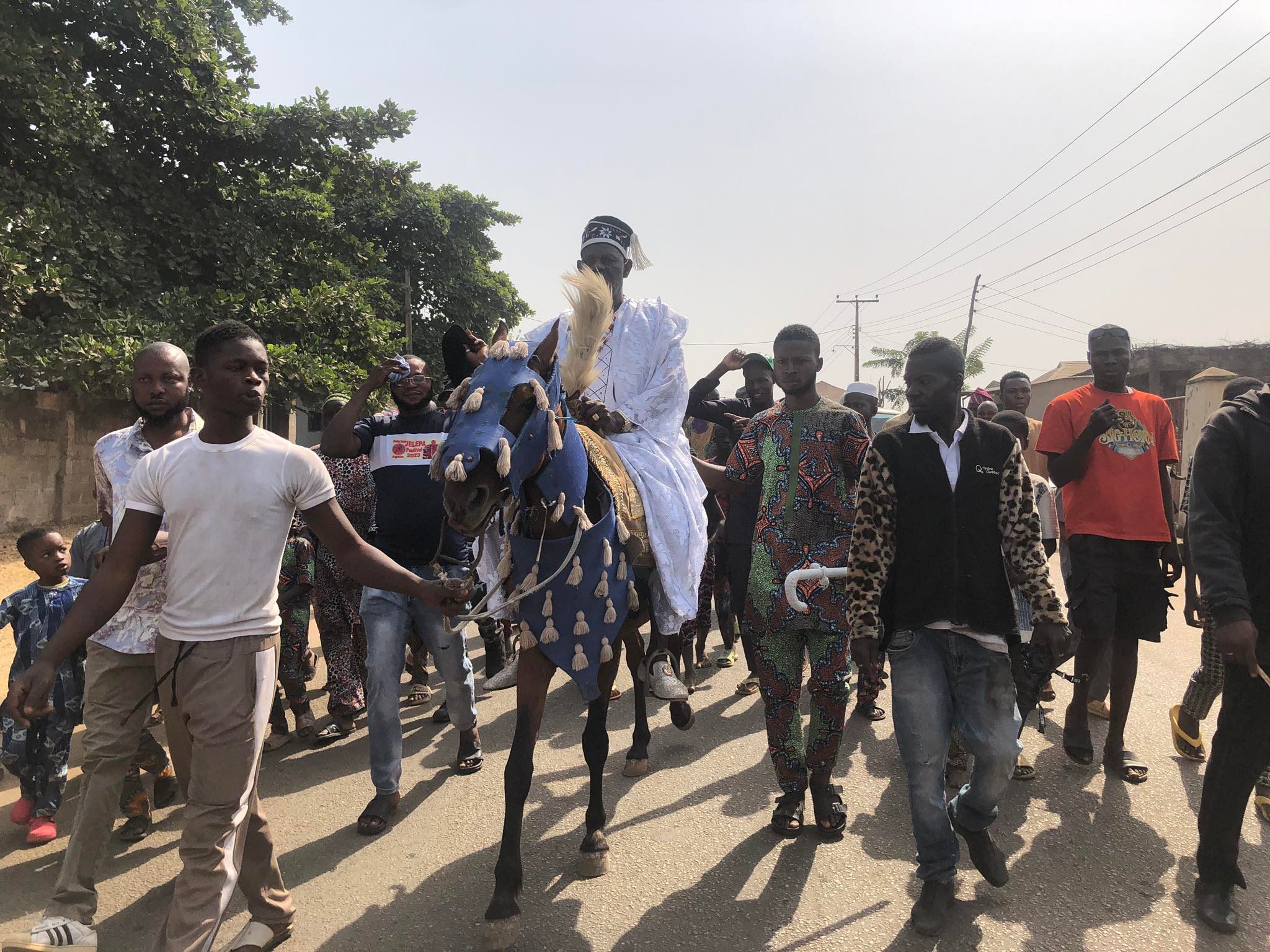
The festival is celebrated around December/ January during the dry season to prevent the case of wildfire that can be caused by long periods of dry season. The festival highlights the role of the Bashorun in the government of the Alaafin. The celebration indicates the inclusion of everyone and the importance of the fulfillment of the rites and traditions. It is believed that wild-fires are controlled through this yearly festival that is used to appease the Ogun.
ÒrìsàObalúayé Festival
Obaluaye is responsible for providing healing for illnesses that are associated with high temperature around January/February, especially during the dry season, because smallpox spreads more easily and is usually prevalent during the heat.
Beere Festival
Beere is normally celebrated in February during the hot season, when there is no farming and no production. Bẹrẹ is primarily the harvest home festival. It is an important one at Oyo, because by it, the king numbers the years of his reign. Bẹrẹ festival serves as a time in which the people indicate their indigenous knowledge and cooperation that implies the harvest of new straw. These harvested straws are to be utilized in roof replacement (re-thatch) – a form of maintenance culture. Bearing in mind the weather or seasonal condition of the environment that is likely to affect their roofing material. The Bẹrẹ festival is the time of the year where roofing materials (thatch) are usually replaced. As a passage of time and record of events, it is that period that observance of a new year is recorded by Sango Koso and the Alaafin through the knotting of the straw. This assists in the proper recording of the years of reign of each Alaafin of Oyo. The record is not recorded by just an individual but by both Sango Koso and Alaafin. Thus highlighting the effectiveness of the Yoruba time recording system.
Egbé Òrun Aláso Osùn
Egbé Òrun Aláso Osùn is celebrated around March and a religious social practice that helps connects the members to their spiritual heavenly comrades. The ceremonies or rites are attended by families and friends, as they see it as an opportunity to connect and appease their heavenly beings for the wellbeing of the community at large. Egbé Òrun Aláso Osùn beliefs include the ideology that every individual has enjoyed the companions of the heavenly mates before coming to earth. They believe their mates in the heavens assist humans to live a fulfilled life.
Òrìsà Obà Festival
Orisa-Obà It is a traditional religious activity that brings together the community in joint worship and celebration around April. It is a festival that reminds them of their heritage and how they got settled by the river bank. The festival is an avenue for interaction, inclusion and togetherness as they eat together and celebrate with neighbouring villages that cross the Oba River. It is a festival that is in remembrance of Sango’s first wife and warrior.
Òrìsà Obàtálá Festival
The Obatala festival is celebrated around May and it is one that denotes purity in every sense as it is highlighted in the dressing of the devotees. In this case, the festival is used to usher in newness and signified by the beginning of the rainy season. It is a festival that denotes ease and the rains bring forth good harvest. This festival highlights the importance of Obatala to the Yoruba people as the foremost and lead of other Orisa.
Egúngún Festival
Egungun festival is celebrated around June /July and is one festival that connects the physical and the spiritual realms thus offering connections with deceased ancestors. Yoruba traditional belief emphasised that the Egungun festival brings peace, blessings and serenity to its host community as they serve as a means of communication between the living and the dead.
Orò Festival
The Oro Festival in Oyo takes place after the Egungun Festival, usually in late July or early August warding off diseases and negative forces from the city. It is a festival that is inclusive of all though the women are to be indoors on the last day. This inclusivity is portrayed in the process of information dissemination where the palace takes all the necessary steps to make women safe. It is a festival that involves everyone in ensuring that the town is cleansed of any unforeseen outbreak.
Traditional Calendar- KÀLEŃDÀ ÌBÍLẸ̀ – KÓJÓDÁ
Community research on the Traditional Calendar- KÀLEŃDÀ ÌBÍLẸ̀ – KÓJÓDÁ
The Traditional Yoruba Calendar or Pre-Colonial Calendar / Kójódá has 13 months in a yearly cycle, 28 days in a month and 4days in a Week and determined by Farm cycles, Seasons and Lunation cycles.
In the past the Yoruba people as an agrarian community counted time by observing the moon to be able to control the food production, planting, weeding, harvesting. Seasonal changes are determined by observing certain birds and insects to help them to determine the seasonal change, which are connected to annual festivals for specific divinities in order to achieve balance in line with nature. Each traditional month has a specific name, which helps to position the farmer or the community with their tasks and daily life activities.
In order to understand the earlier pre-colonial idea of a year calendar system, it is pertinent to reach the Yoruba origin period and myth of the creation of the world, being the base of the primordial calendar, which is the first pillar of the Yoruba social structure.
It is based on fixed number (4), which concept is related with the traditional beliefs about the Universe being round and its creation started with four (4) points. This is the base of Yoruba week of 4 days, called Orita– crossing road. The four corners gather at the center of the circle origin. Taking these four corners away in the circle, means the 4 corners were taken into the center. The traditional organization of the Yoruba village and the family group can serve as a social illustration. The chief of the family group has his house at the centre of the family compound, Baale Agbo Ile, chief circles houses. This primordial seed defines the Yoruba social structure.
The semantic reconstruction of the divinatory calendar system is purely oral through Oriki- oral histories and chants. The 4-Day Week it marks values of the four most important divinities in the Yoruba cosmology and the market cycle. The calendar has a very simple divinatory matrix, which draws towards Yoruba past, reaching the aborigine of Òrìsà Nlá period, going through cosmological spiritual sacred status.
This serves as the primordial seed that defines the Yoruba social structure. It marks the values of the number four (4) in the major deities in Yoruba cosmology and in the market cycle.
It is based on fixed number (4), which concept is related with the traditional beliefs about the Universe being round and its creation started with four corners.
ORIGIN OF DAYS the traditional religion of the Yoruba people is known as ABOÒRÌS À. Elédùmarè (Supreme Creator) sent the ÒRÌSÀ for the creation of the earth, attributing them different functions related to nature and operation of the world. Elédùmarè delegated his powers to the Òrìsà and gave them autonomy and authority to act, according to the power received from HIM. In the beginning, there were no week days and Elédùmarè decided to give the Òrìsà Day 1 is dedicated to Ògún Òsè Ògún; Day 2 is dedicated to Sàngó / Òsè Jàkúta ; Day 3 is dedicated to Obàtálá/ Òsè Obàtálá; Day 4 Òsè Ayó is dedicated to other Òrìsà.
These days were brought from heaven in the olden days known as “Orun Ojo” and the new generations introduced a new system of week days with the missionaries in 1842 called “Ose-Igbalode” based on standard Gregorian (Christian) calendar. These days are the new seven (7) days week introduced through colonialism, foreign religion and somewhat imposed through varied forms of interactions. Thus, the new seven day week over shadowed in indigenous four (4) days week. A Yoruba traditional month is recognized after a cycle of 7 weeks of 4 days is ended. The 28 days month is observed by farmers returning home from the farm stead to pay tribute to the king.
The 28 days month is known as ”Ojo Oloyin, which is still be very important in the Yoruba society.
During this period the farmers and hunters come back to the town, as well the community meets together in their (agboile) families compounds. The end of the month is when the chiefs conduct their meeting in the palace to plan for the next new month.
This day has been always marked as a Joy Day and it is tradition to welcome the chiefs in the palace with hot corn pap mixed with honey (oyin), which gave origin to the name Oloyin.
Besides the last date of the month is always on Òsè, Sango, or Jàkúta days, the last day is referred to as Jàkúta Olóyin.
These cycles are related to the different moon cycles, which give firstly the 7 weeks as a month and the total of thirteen (13) months as a full season cycle.
The 13 Months of the Yoruba Calendar are known as
– Osù Ònpa or Beere (January) when the farmers commence to plant yam and process the palm oil by the dry season known as Èèrùn ;- Osù Egùn Àlà-Àlénù (January/February), a very dry time witnessing one time night rain, known as Bàárú. No farming at this time;- Osù Eko-Aláràn Òyígí (February/ March), beginning of the early rain and marks the commencement of corn planting;- Osù Alenú Agà-Molè (March/ April), the time of strong winds and heavy rain, known as Ìjì. It is the time for the new corn to sprout. A lot of work for the farmer;- Osù Agà-Ìràwé (April/May), seasonal change witnessing lot of chameleons in the farm, assign that the corn is ready and the new yam is harvested. During this time there is daily rain Ejidún;- Osù Ejedún-Egungun (May/June), there is a lot of food during this time and Egungun Festival commences;- Osù Efà Odún-Àlànù (June/July), during this time the rain comes with some chills and cold-Ogìnnìntìn;- Osù Ejo Odún– Yemoja (July/August), it is important to note that the New Cycle or New Year’s dates can vary between this month and the following month (Osù Àrún Odún), since the traditional calendar does not have a fixed date.
It is time of plenty food, animals, especially chicken and the female dogs are pregnant; It is known as raining time, Èwo and during this time the earth is cold, increase in death rate;
– Osù Àrún Odún-Oosa Oko (August/September) Seasonal change and it is important to note that the New Cycle or New Year’s dates can vary between this month and the previous month (Osù Ejo Odún– Yemoja ), since the traditional calendar does not have a fixed date. It is time to plant corn during the dry season. This is the time for the communities and their ancestral Orisha to eat the new yam. This period is sunny with strong rain, known as Àrámoká; – Osù Èrin Odún- Orun (September/October), a lot of rain, the rivers get full and the farmer sewed the farms;- Osù Età-Odún- Alaran Oyigi (October/November), it is time for farmers to start to cut the yam – Osù Edi- Ògún (November/December), the pre-dry season fruits will come out because of the fog and cold weather, known as Oyé;- Osù Irá (December/January), all the fruits are out and it is a time when smallpox’s outbreak is most likely to occur.
The Yoruba have 2 seasonal changes, which occurs by the beginning of the rainy season (April/May) in the first harvest of new yams and the second change occurs at the beginning of the dry season (October/November) with the end of the rains.
The harvest of the new yam plays a very important role in the communities; It is divided into 2 harvests, the first occurs at the beginning of the rains, in which the first yam still has a soft a texture and is known as Egbodo. The second harvest occurs around August/September and it can be said that it is like a sacred moment, to the point that the communities have specific dates to start eating the new ripened yam known as Isu Egbe; Specific rites are attached to the community or family to their ancestral Orisa, such as Sango, Orisa-Oko, Ogyan, Orun, among others.
Thus, the introduction of the second harvest of Isu Egbe yams in the communities marks a NEW CYCLE, which is renewed annually around the same period. This New Cycle marks the Traditional New Year that begins in August, during the Sango Festival when the Orisa Sango, the devotees of Sango and the Alaafin begin to eat the new Yam.
Lorem Ipsum has been the industry’s standard dummy text ever since the 1500s.